31st October 2025 – Dame Elizabeth Hall, Bournville
It was the night of All Hallows’ Eve, when the realm that separates bees and beekeepers was at its strongest. A lot of the more nocturnal beekeepers among us braved the cold, dodging the trick-or-treaters along the way, to come and listen to our October winter talk by Tim Vivian (Brum’s rooftop beekeeper!).
Those who made it, were in for a treat. Tim shared with us some extremely detailed images of the anatomy of honey bees. This was something beyond your usual microscope images. I have never used a microscope (maybe once in biology at school, but I really can’t remember it) but the one Tim used was on another level. He had managed to get permission for the use of a high-powered, £30,000 all-singing-all-dancing electron microscope from Birmingham University. For those who have some knowledge of electron microscopes, you may know that to use them, the subject has to be able to conduct electricity. To solve this issue in bees (they are notoriously bad at conducting electricity — apparently!) they had to be gilded in gold. I imagined Tim painstakingly cutting up gold leaf into 6 mm sections to cover a bee.
Amongst other details that Tim shared with us, he explained that the bees’ mandibles are used to take the wax cappings off the honey, and they are also used as a warning to give other bees a ‘nip’ if they try to enter the hive, rather than stinging them.
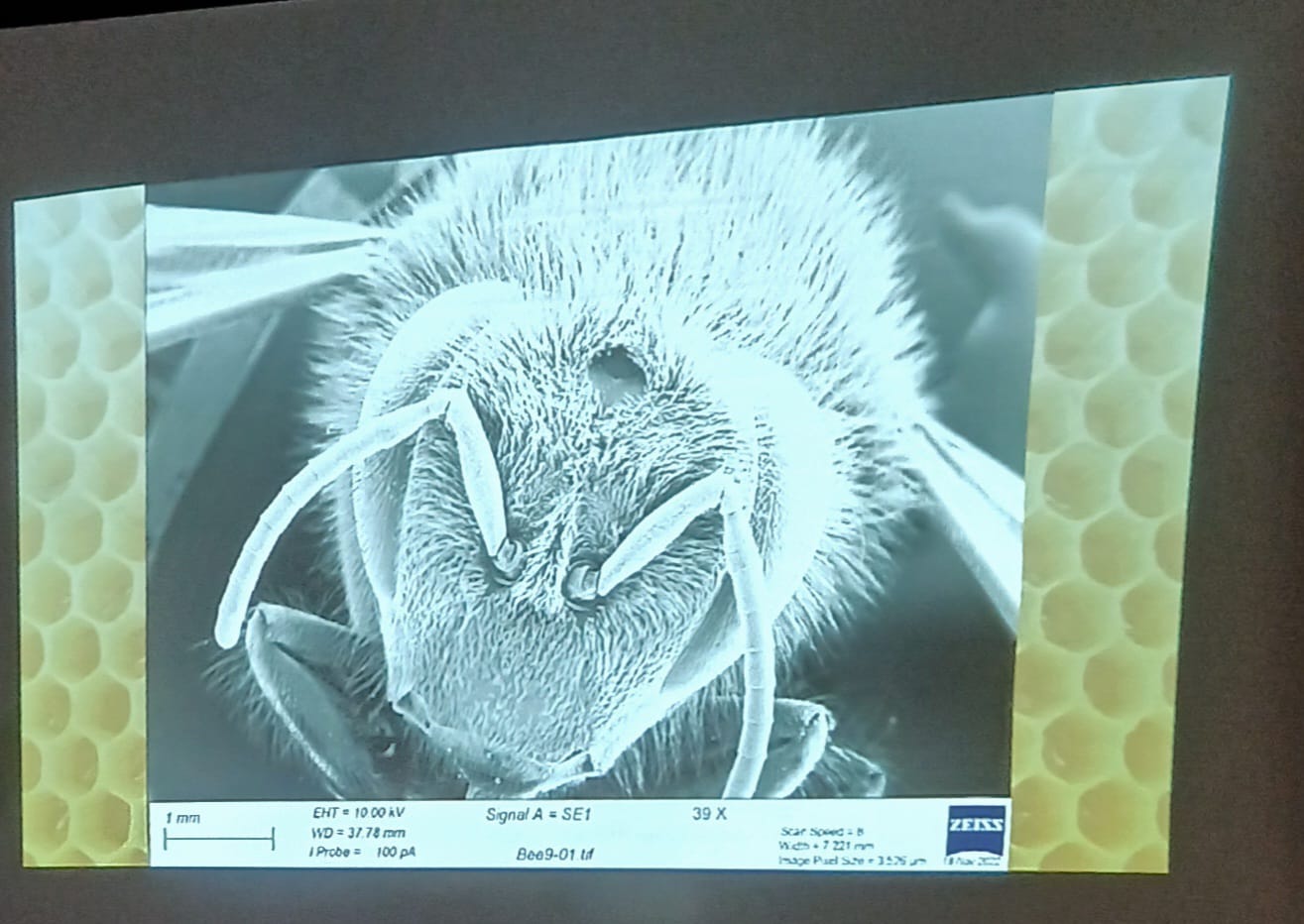
He went on to describe how the bees’ antennae have several functions that are used to detect heat, taste, and movement. Often these antennae get covered in pollen, and the bees use the hooks on their legs to clean them off. They then add a minuscule amount of honey to bind the pollen together and put it into their pollen baskets to form the ball we all recognise.
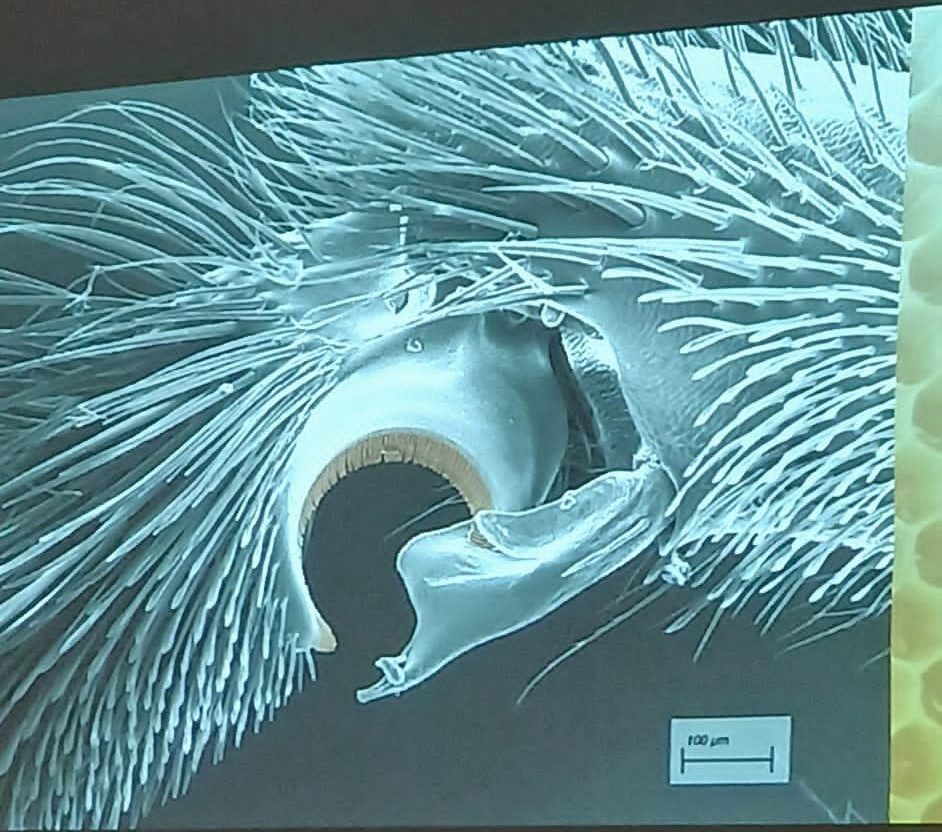
Have you ever wondered how a bee can stick quite firmly to your bee suit or how they can walk up a window? Well, on the ends of their feet they have hooks and teeny-tiny suckers that allow them to do this.
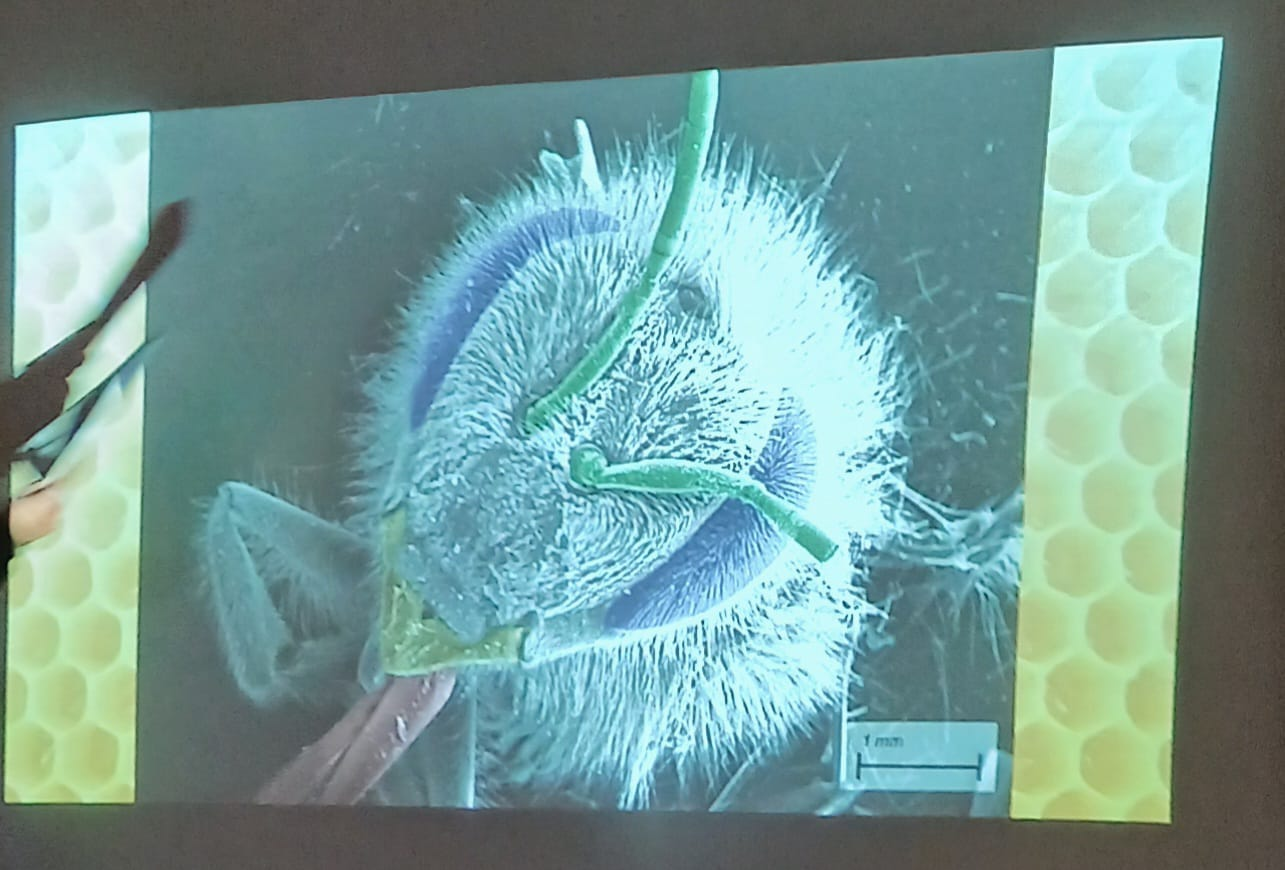
Moving on to bees’ eyes: like we do, bees see things in pixels. A worker bee sees things with a high resolution; whereas a drone only really needs to be able to find the queen and a hive to eat in, and the queen has quite low resolution vision, as she only needs to leave the hive perhaps twice in her life — and she will have her entourage with her to guide her anyway.
By Richard James – Social Secretary